Resilient Transitions unfolds as a site-specific environment conceived to be inhabited, where nature is understood as a unified living field in which matter, body, and thought are inseparable. Within this perspective, transformation is not the exception, but the fundamental condition of existence: everything persists, adapts, and evolves through unceasing change.
In a world marked by acceleration, fragmentation, and widespread ecological precarity, the exhibition opens a space for profound reflection. Rather than offering certain answers, it poses a vital question: how can we evolve meaningfully within systems that we cannot fully control? What drives us to persevere, to activate our latent capacities, and to continue growing even under conditions of uncertainty? In this place, works are not presented as discrete or finished objects, but as encounters. Natural, temporal, and corporeal forces slide into one another, dissolving and reappearing in a narrative that accepts no final state, rendering the viewer not an external observer, but an element immersed in the flow.
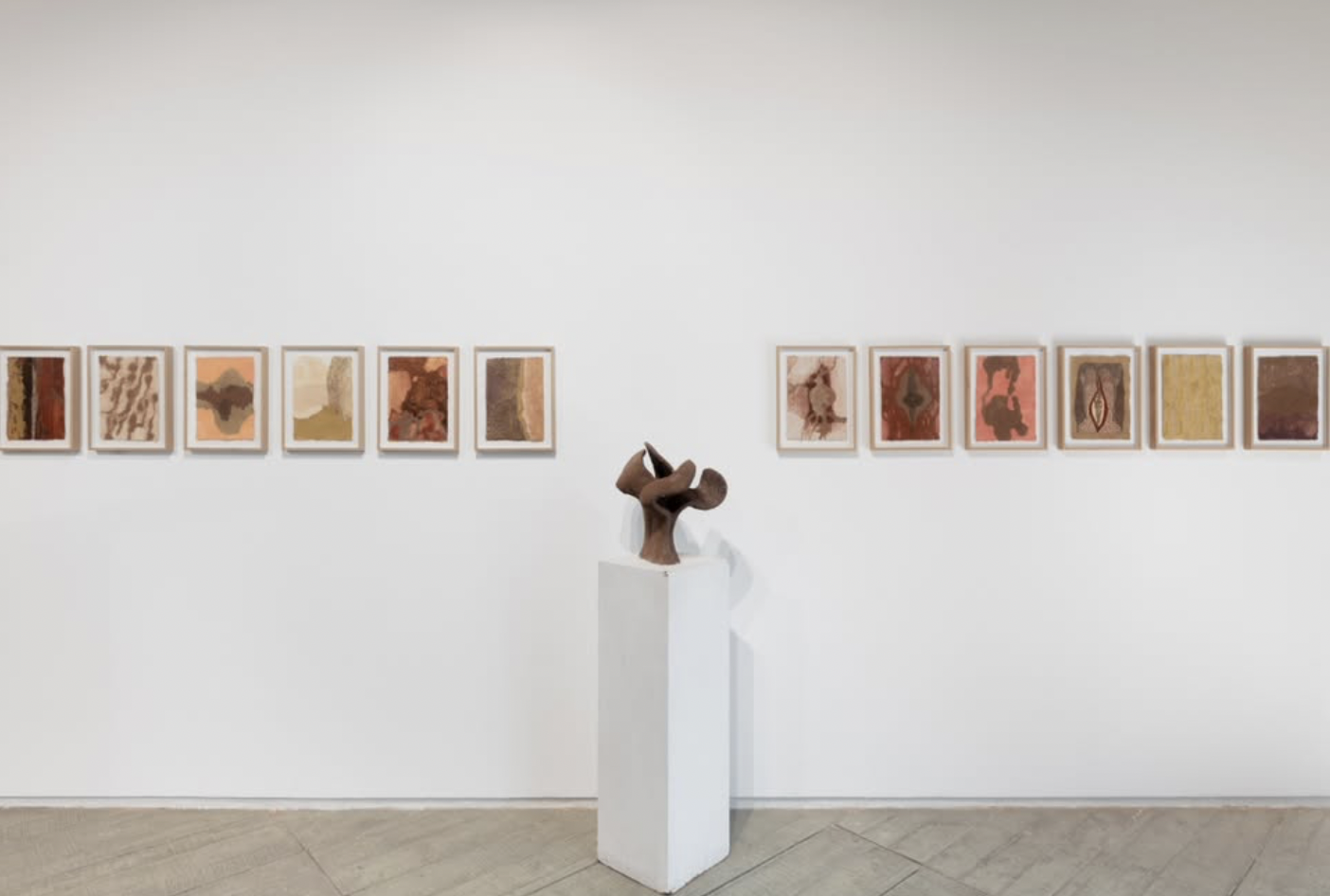
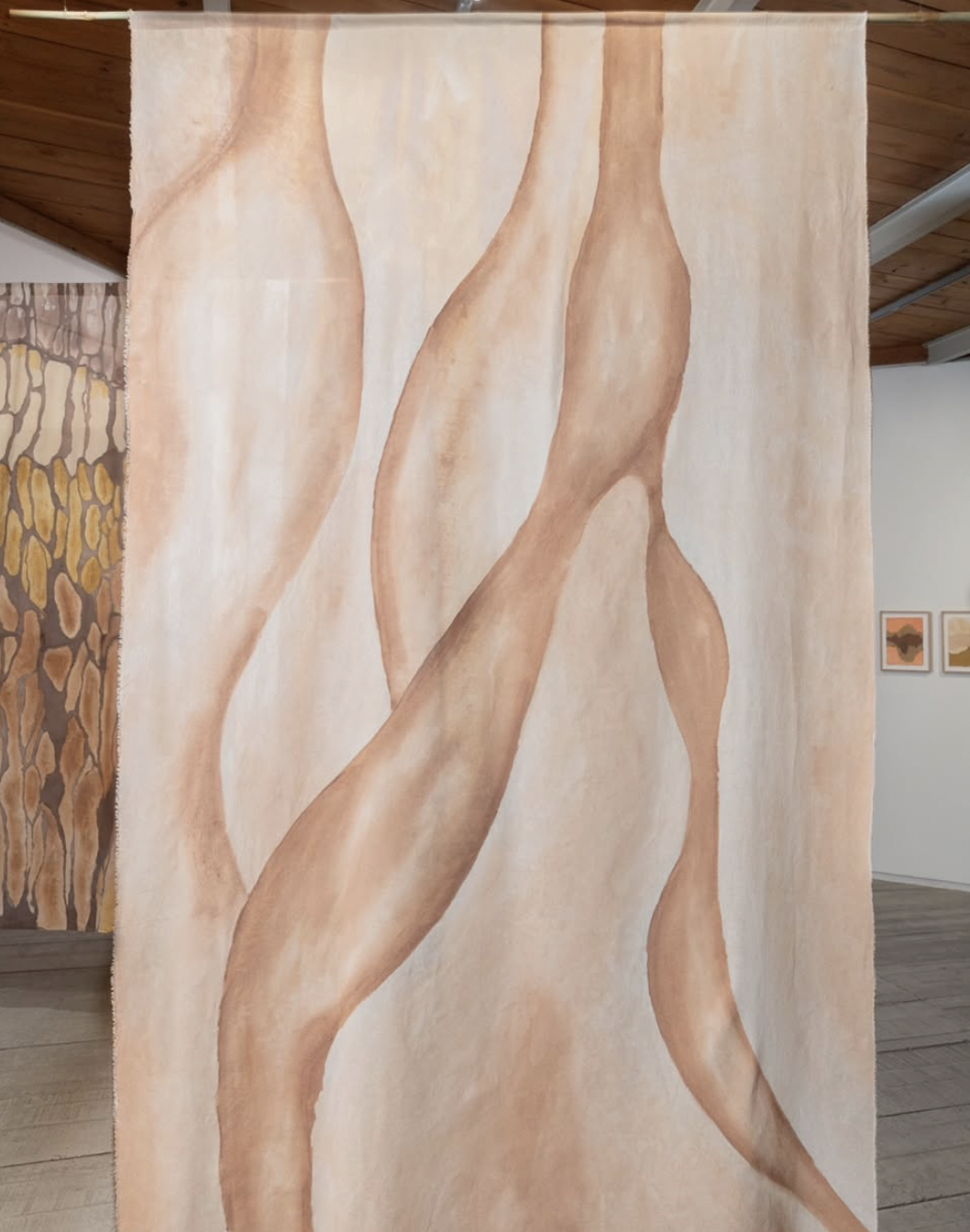
Franka’s paintings, created with mineral pigments and pulverized granite, do not describe images but evoke a sedimented memory. Her tactile surfaces, inspired by the geological force of coastal cliffs, capture time as an open trace; every gesture remains suspended between conscious control and surrender to the material, reflecting the tireless force of a nature that models itself in continuous becoming.
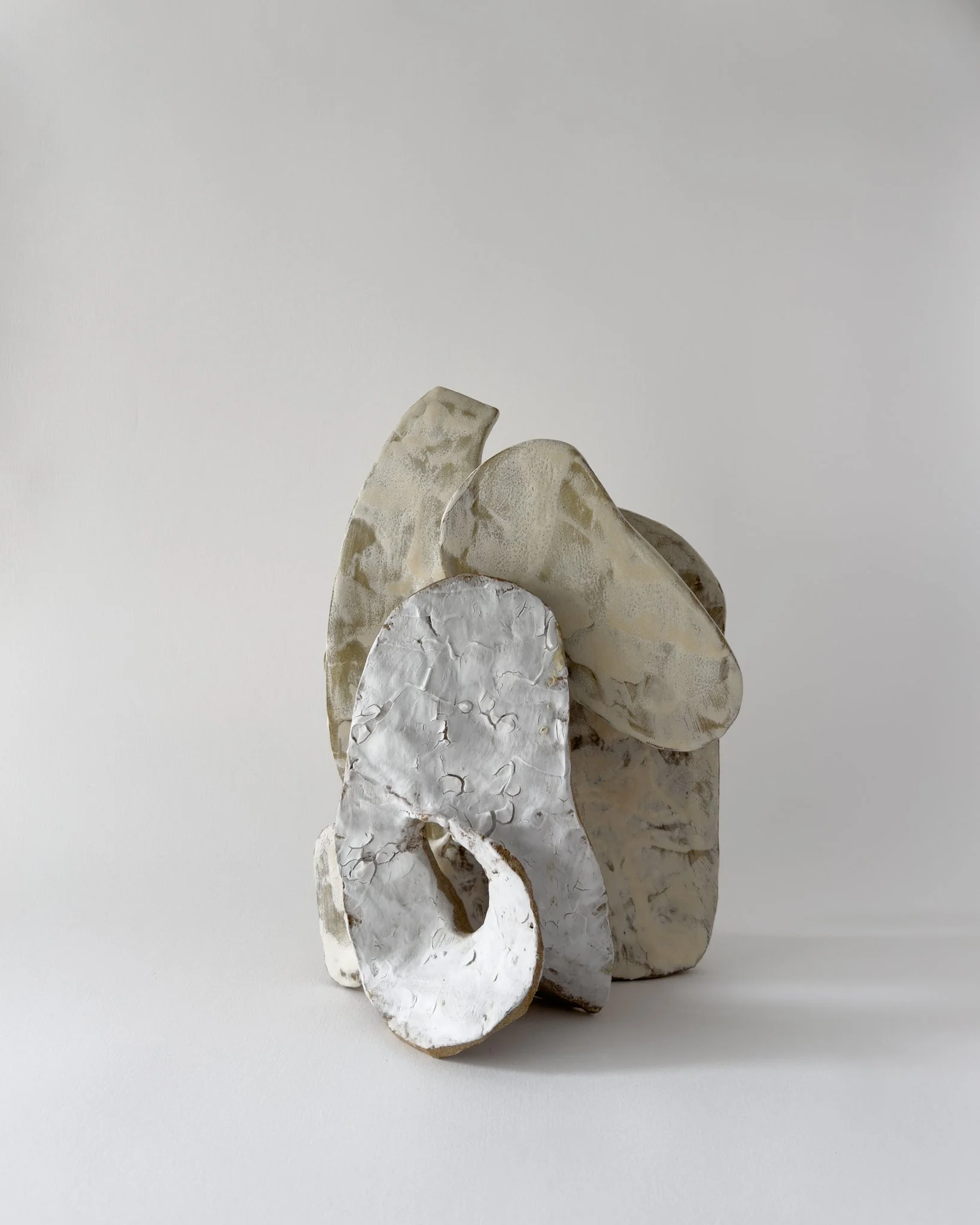
In parallel, Vania’s sculptures move with a density charged with tension: built through cycles of manual modeling and repeated firings, they embody the fragility of weight and the instability of form. Their surfaces accumulate like layers of skin or eroded terrain, marked by fractures and deposits that emerge from the interaction between matter and heat; here, resilience appears not as rigid resistance, but as the profound capacity to absorb change, reorganize, and persist through metamorphosis.
Between the bidimensionality of painting and the physicality of sculpture, an interstitial field emerges where the works do not exist in isolation, but rather implicate and extend into one another, generating a shared spatial condition. Within the triangular architecture of the gallery, a subtle pathway unfolds - not imposed, but discovered through movement - transforming the space itself into an integral part of the work: a constructed environment that breathes and invites cohabitation.
Both artists resist the closure of fixed meanings, remaining committed to process and to what still exists in a state of potentiality; within this openness, vulnerability becomes a method of inquiry, and matter is left free to negotiate with itself. Connection thus emerges as a vital response to uncertainty, transforming the act of coming together - through artistic practice and collaboration - into a way of navigating the precariousness of the present.
The body, extended across the surface, appears as both a poetic and political act, challenging the viewer’s sensibility and calling forth a more conscious relationship with what is seen and felt. It does not emerge as spectacle, but as a form of sustained attention and inner transformation. Beauty, in this context, does not assert itself; it quietly surfaces where pigment gathers or dissolves, where form yields to that which it cannot fully contain.
The installation dimension seeks to interrupt established logics and propose new modes of relation, positioning the observer within a social system in constant tension and reconfiguration. Space ceases to function merely as a site of contemplation and becomes instead a territory of negotiation, displacement, and collective awareness.
At its core, Resilient Transitions is an invitation to embrace the courage of transformation, reminding us that adaptation does not begin with control, but with the willingness to reimagine the systems we inhabit. The exhibition resists definitive resolution, revealing itself instead as a living system of relationships and slow transformations that invites us to consider ourselves not as fixed identities, but as potentialities that persist through change. Within this space, time does not erode: it inscribes itself deeply. And the works continue, silently and insistently, becoming.